Most travelers know that Tuscany is famous for its romantic countryside dotted with wineries and hilltop medieval villages. Before going there, however, I didn’t know that Sangiovese was the undisputed king of Tuscan grapes. I never imagined that Chianti was defined not by the wine but rather by the region where it’s produced. And if you’d asked, I might have surmised that a Super-Tuscan was one hunk of an Italian guy.
I obviously had a lot to learn, including acknowledging I could spend a lifetime drinking Tuscany’s wines and remain knowledgeably ignorant. So, here’s my clueless take on the basics, along with my favorite wineries, impressions of the medieval hilltop village Cortona (because that’s where I stayed), and a little about the food, because you probably shouldn’t be drinking the entire time.
Tuscany really does look like a postcard
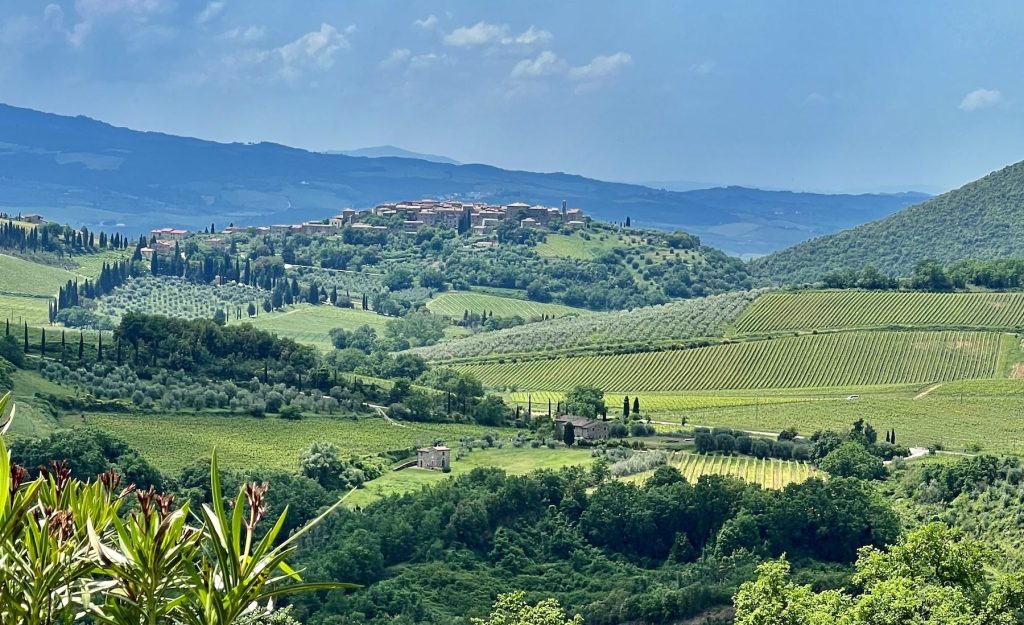
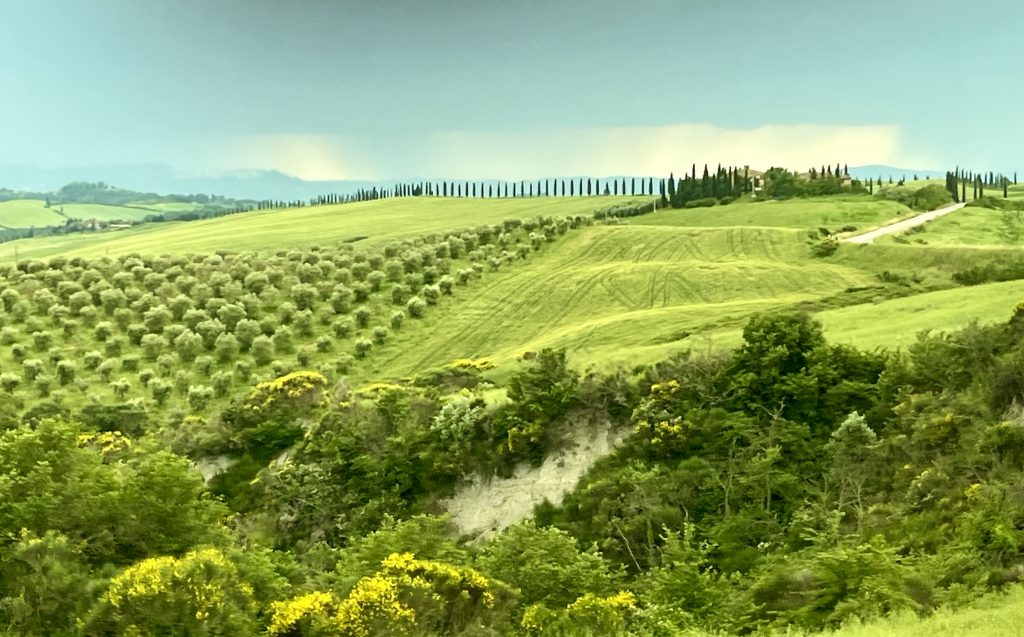
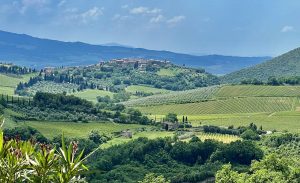
Tuscany is a verdant, gently rolling landscape, punctuated by hillside vineyards, olive orchards, pencil-straight Italian cypresses rising like sentinels, ancient walled villages perched on hilltops, and rollercoaster-winding roads.
And the colors! Changing hues from shades of green to yellow waving wheat, rose bushes planted alongside grapevines, the jolt of a sea of red poppies, and wildflowers dancing yellow and white. All is well with the world when the sky is blue, but even clouds chasing shadows across the earth or fog hovering in the valleys lend a dramatic, even romantic air.
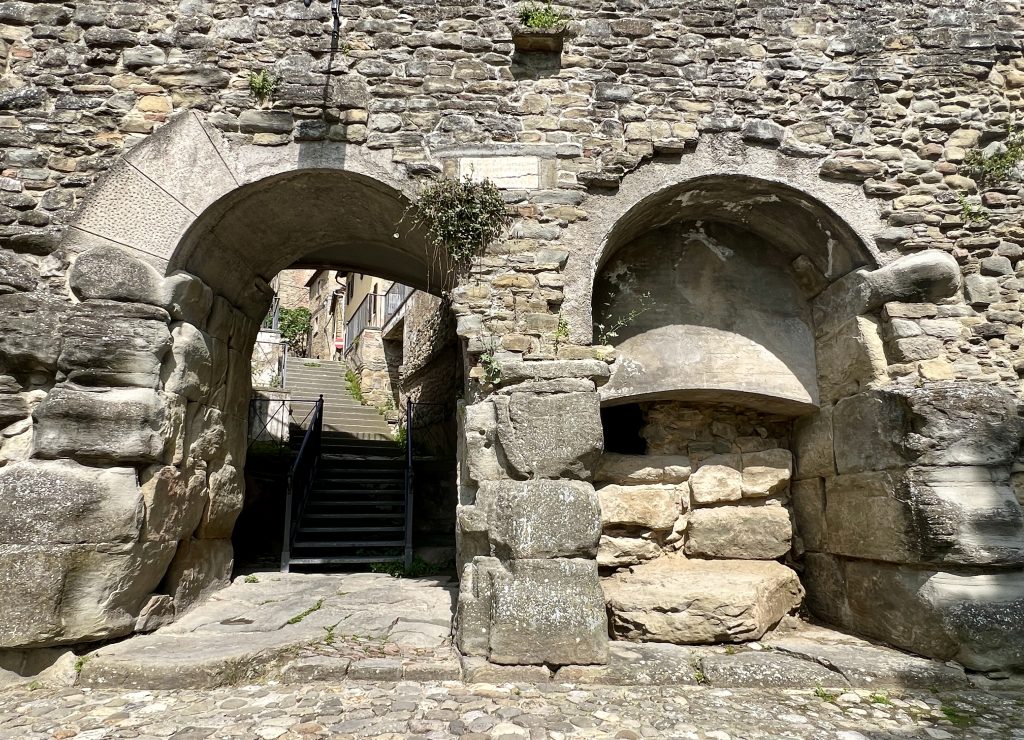
And what would Tuscany be without the Etruscans? This ancient civilization, which reached its zenith around the 6th century BC, not only cultivated vineyards but also gave Tuscany its name. Towns like Montepulciano and Cortona owe their very foundations to the Etruscans.
But what I love about Tuscany–and most parts of rural Europe for that matter–is the pace of life. It’s slower than my normal routine, as though simply being is reward enough. Italians know how to enjoy food, too, deliberately, with joy and as a reason for celebration. Farm-to-table isn’t some trend but the way it’s always been. It says something about a people who take pleasure in something so small and fleeting as an espresso.
Sangiovese, the king of Tuscan grapes
When you’re talking about wine in Tuscany, you’re talking mostly about Sangiovese, which literally means Blood of Jove, or blood of the Roman god Jupiter. Between the 17th and 18th centuries, Sangiovese was declared the base grape variety for all major Tuscan red wines. Today it accounts for two-thirds of the grapes grown in the region. Without Sangiovese, you wouldn’t have Chianti, Nobile di Montepulciano, or Brunello di Montalcino, some of which are made exclusively with the Tuscan grape.
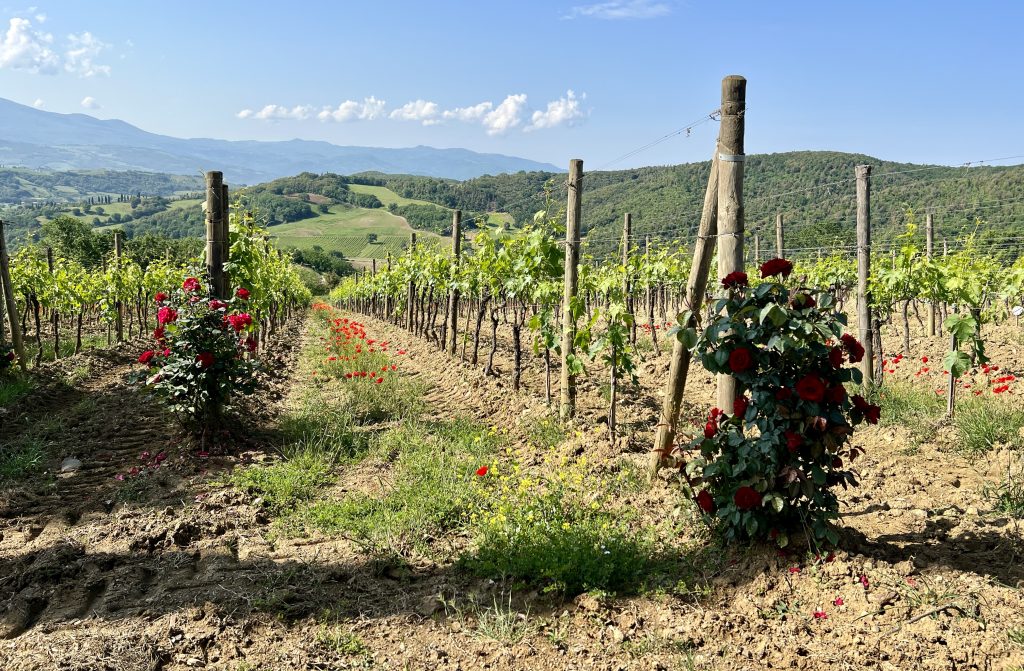
Naturally, all this is due to Tuscany’s special place in the world, a land of hot, dry summers and diverse soils that often include blends of clay and limestone. The result is vines that produce small bunches of grapes that are rich and concentrated, with thick peels. Sangiovese wines are tannic, with medium acidity and flowery and fruity aromas.
The Super-Tuscan Rebels
Although there are other traditional grape varieties often combined with Sangiovese, including Canaiolo nero for its softness, Colorino for its intense color, and Ciliegiolo for its fruity aroma, international rebels burst onto the scene in the 1960s (oh, those rebellious sixties). These so-called Super-Tuscan wines, made by blending international grape varieties like Cabernet Sauvignon and Merlot with Sangiovese, created an uproar among traditionalists. However, some blends were not only very good but also inexpensive. They ultimately led Italy to rewrite its laws regarding wine quality.
Rules regarding wine quality in Italy
Italy–and the EU–has very strict rules governing wine quality, from grape varieties and defined regions to ageing. These rules also categorize wines based on that quality. Although you might not care about these designations, they’re useful for deciphering wine labels.
At the bottom of the pyramid are generic red and white wines, which carry no restrictions on grape varieties or where they’re grown. They’re the wines you might find at your local supermarket at reasonable prices.
Next up are the IGT wines (Indicazione Geografica Tipica), which must have at least 85% of its wine from a specific geographical area. Although many are lower priced wines, they also include highly prestigious ones like some like Super-Tuscans.
DOC (Denominazione di Origine Controllata) wines are produced following strict regulations, including where they may be grown, the grapes used, and cultivation, production, and ageing methods. These wineries undergo yearly inspection in both the vineyards and cellars, including laboratory analysis and tastings.
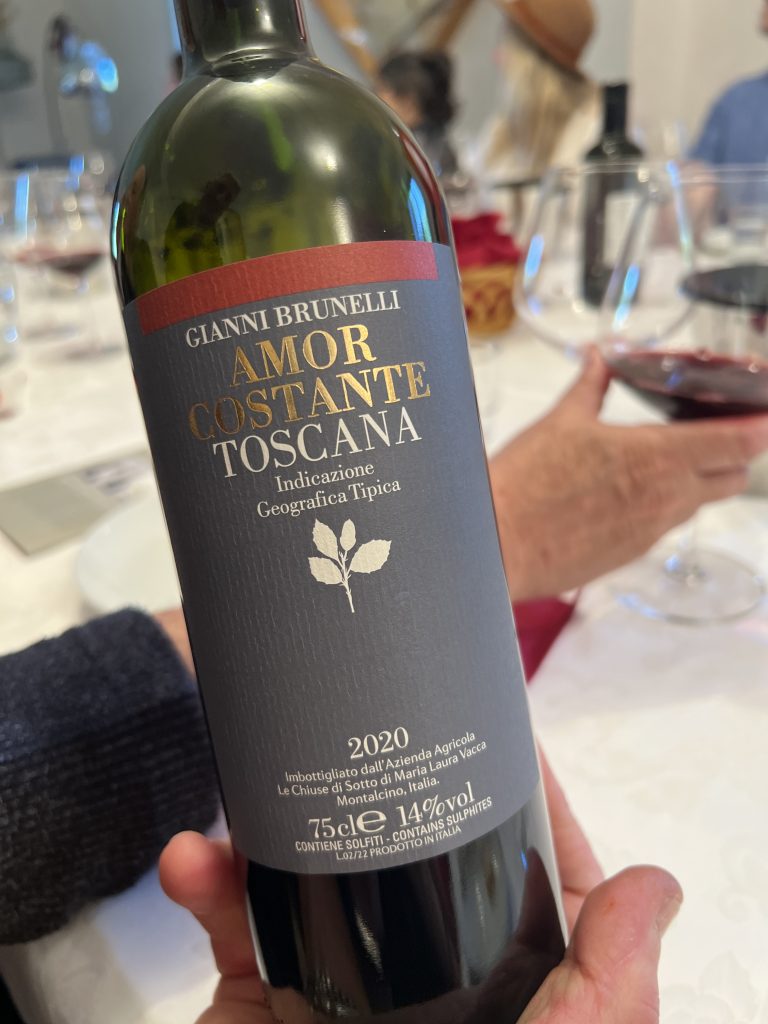
DOCG (Denominazione di Origine Controllata 3 Garantita) wines are the most prestigious, governed by regulations that are far stricter than for DOC. Many carry the further distinction of being Riserva or Superiore, which boast an even higher quality, are aged longer, and can be preserved for longer periods. Naturally, you pay for that.

Some wine regions in Tuscany
Chianti in central Tuscany
Of the many wines produced in Tuscany, none is more widely produced than Chianti nor as internationally famous. As far back as 1716, the Grand Duke Cosimo III de’ Medici recognized the need to protect Chianti’s status by decreeing boundaries and rules, making it the first designation of origin in the world.
At that time, Chianti was made exclusively with Sangiovese. Then, in 1837, a new Chianti was produced by combining 70% Sangiovese (for aroma and structure) with Canaiolo (to soften the hardness of the Sangiovese) and Malvasia (to lighten it). This new combination made it drinkable right away, which, as you might imagine, caused its popularity to soar. To capitalize, wineries in Tuscany and beyond copied it, with little regard for quality or authenticity.
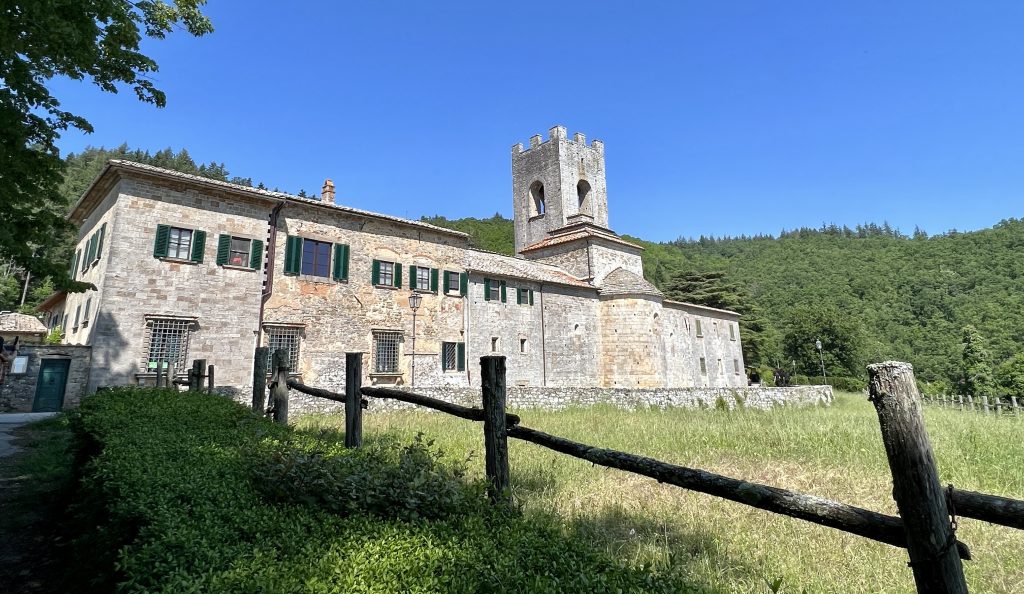
What horror! To rein in the mayhem, territorial restrictions for producing Chianti were defined for the first time, and wineries within the historical 1716 boundary were designated the sole producers of Chianti Classico. Surrounding the Chianti Classico zone are other Chianti DOCG areas, but they’re as different from each other as the lands where they’re produced. Whereas Chianti Classico is likely to contain 100% Sangiovese, these newer regions often contain up to 30% other grapes, including Cabernet Sauvignon, Cabernet Franc, and other red and even white grapes.
Badia a Coltibuono winery
One of the oldest wineries in Europe and the oldest in the Chianti Classico zone is Badia a Coltibuono, a former monastery founded in 1051. It possesses a document from the late 12th century that contains one of the earliest known references to the name “Chianti.” Today it offers tastings, lodging, a restaurant, and a Renaissance garden, and like many of the wineries I visited in Tuscany, its wines are entirely organic.

During my tour of its ancient cellar and a wine tasting that included a Chianti Classico DOCG, a Chianti Classico Riserva DOCG, and a Super-Tuscan, I was surprised yet encouraged to learn that medieval monks drank four liters of wine per day, a necessity because their only access to clean water was rain barrels. That made my one or two wine tastings a day, followed naturally by wine at dinner to expand upon what I’d learned, seem rather harmless.
Montepulciano
Although perhaps not as well known as Chianti, Montepulciano wine also has a celebrated history. In the 16th century, Pope Paul III’s wine-keeper called it “perfect as ‘tis the wine of Lords.” In the 17th century, Montepulciano wine became the rage of European nobility after Bacchus declared in a popular poem, “Montepulciano is the king of every wine!” A century later, Voltaire’s fictional Candide drank it. U.S. President Thomas Jefferson considered it fine enough to serve to guests.
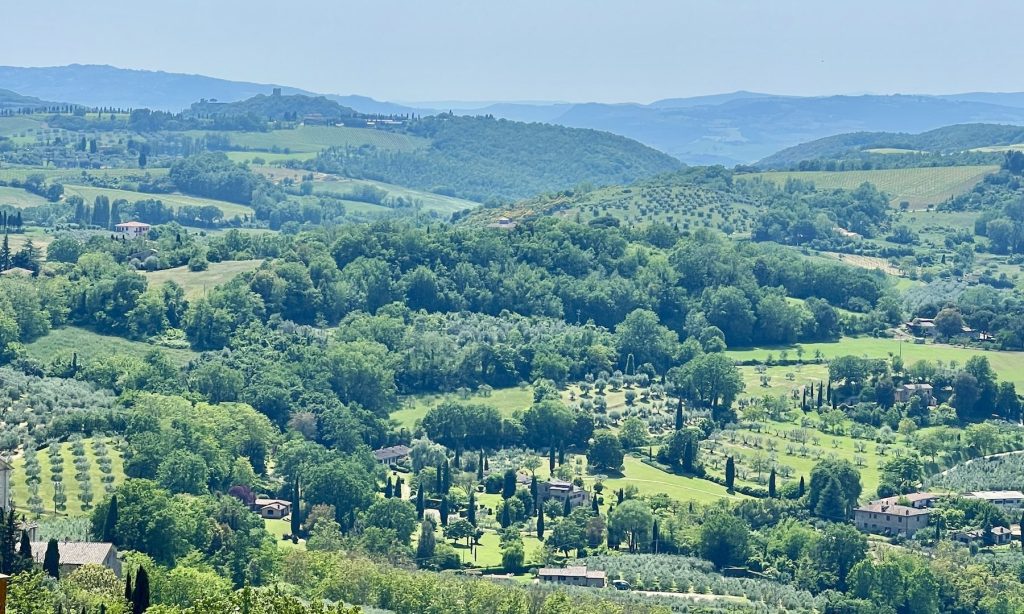
Traditionalists make their Nobile di Montepulciano DOCG wines with mostly Sangiovese, adding native grape varieties like Canaiolo, Colorino and Mammolo. While Nobile di Montepulciano wines must contain at least 70% Sangiovese, Super-Tuscans often include international varieties like Cabernet or Merlot.
The town of Montepulciano
A bonus to visiting Montepulciano wineries is the namesake’s ancient town, once inhabited by the Etruscans, later headquarters of a Roman garrison, and a flourishing city during the Middle Ages. It’s grand even today, the largest and most history-filled town south of Siena.
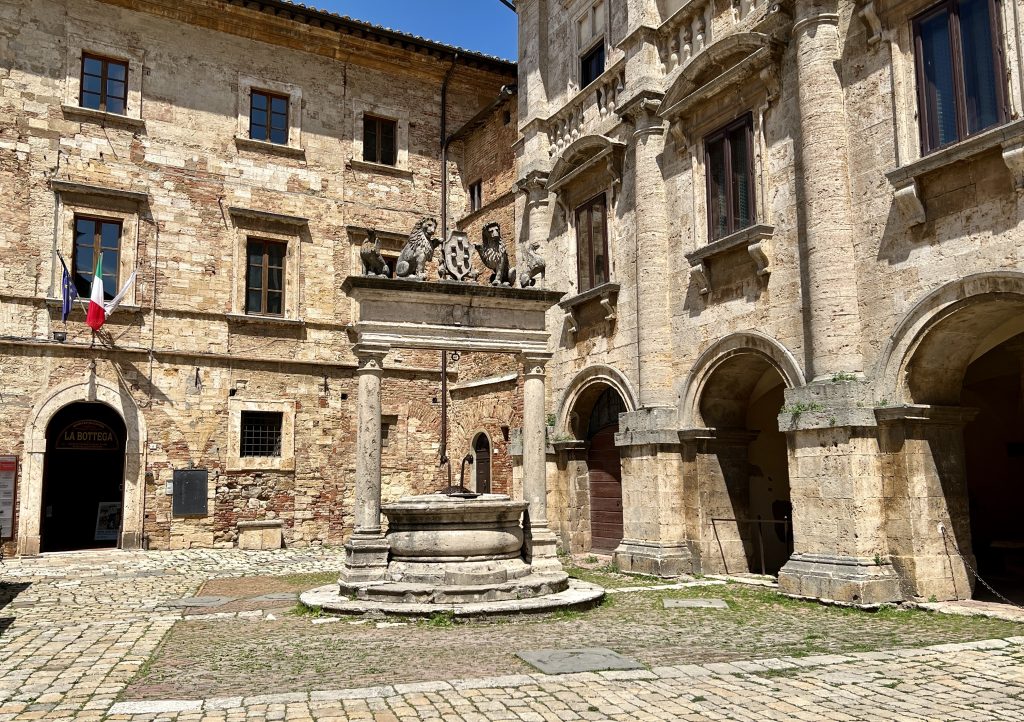
Among the many movies filmed here are The English Patient (1996, with Ralph Fiennes and Juliette Binoche), A Midsummer Night’s Dream (1999, with Michelle Pfeiffer and Kevin Kline), Under the Tuscan Sun (2003, with Diane Lane), New Moon (2009, second saga in the Twilight series), and Medici: Masters of Florence (2016, with Dustin Hoffman). Watching these, you might catch glimpses of the Piazza Grande, Palazzo Comunale, the Duomo, churches, and many stately buildings. But that’s second best compared to walking the streets yourself. Skip the Torture Museum, unless you find the real world simply not gruesome enough.
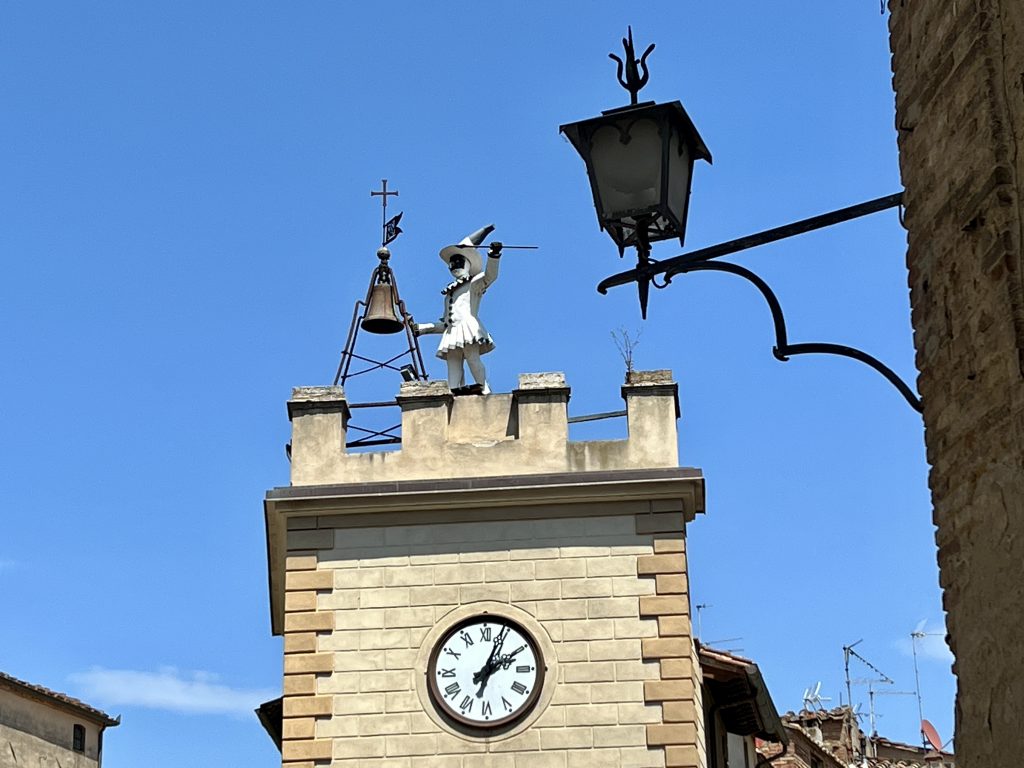
I regret not being able to witness the annual Bravio delle Botti festivities, which among other things features a race of empty 176-pound barrels being “rolled” 1,700 meters through the town’s streets, along with outdoor dinners served to everyone. Using barrels, however, is a rather new phenomenon. For centuries, the race through town was on horseback, which was probably more exciting but exceedingly more dangerous.
Montepulciano wineries
Although there are wine cellars in Montepulciano’s historic center offering tours and tastings, I visited vineyards in the countryside. Avignonesi is the face of forward-facing Italian wineries today: 420 acres of organic and biodynamic estate-grown grapes, along with cover crops, fruit trees like peaches and pears, vegetables, olive trees, composting, beekeeping, chickens, geese, and sheep.
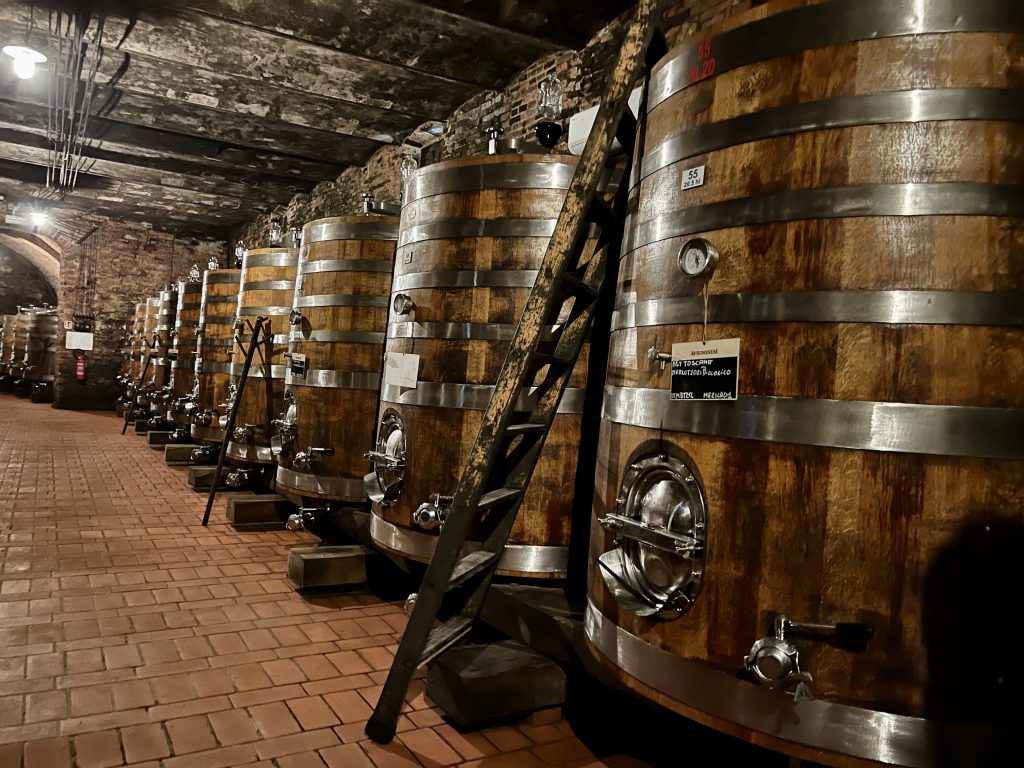
In addition to tasting wines made from 100% Sangiovese (the vineyard’s focus) and aged in oak barrels, I also tried blends made with grapes grown on its estate in nearby Cortona, where the soil is conducive to international varieties. In addition to wine tours, Avignonesi offers a cooking class and a farm-to-table three-hour lunch.
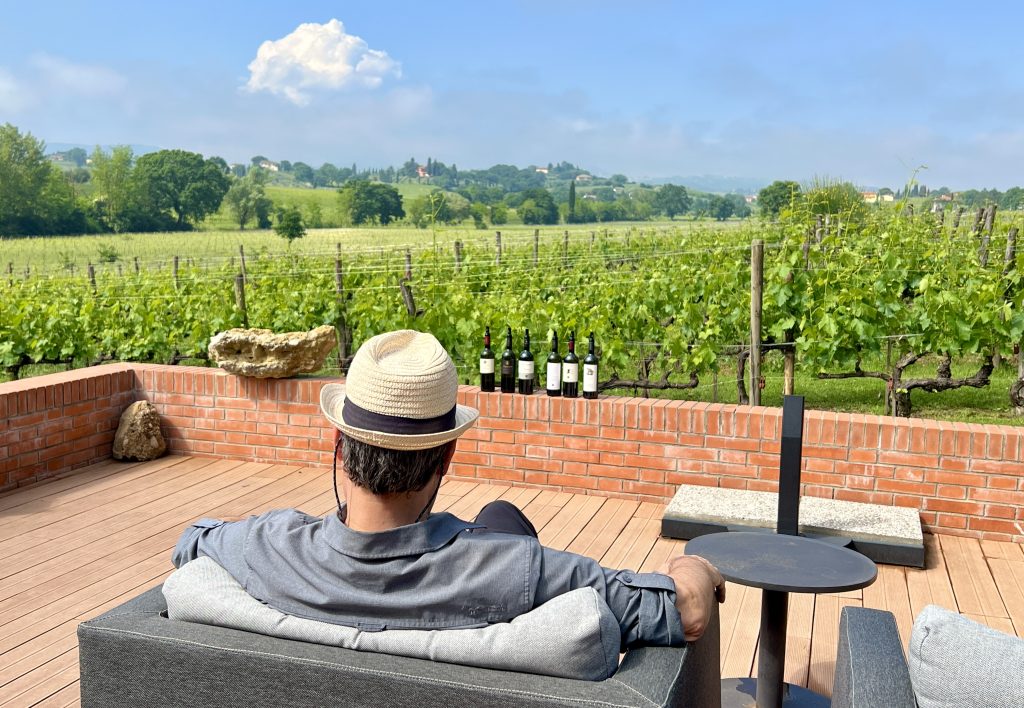
Poliziano, a third-generation winery begun in 1961, also focuses mostly on Sangiovese, though with vineyards also in Cortona it offers blends as well. Its Le Stanza IGT, for example, is made with 90% Cabernet Sauvignon and 10% Merlot, possessing a dark chocolate essence perfect for after dinner. Otherwise, its Nobile di Montepulciano DOCG is a standout, aged at least 14 months in barrels and then good for about 15 years before drinking.
By the way, Poliziano takes its name from the humanist and poet Angelo Ambrogini (1454-1494), nicknamed “Poliziano,” who must have been quite the genius in his time. Born in Montepulciano, he moved to Florence at the age of 15 after his father was murdered. At 16, he translated Homer’s Iliad from Greek to Latin. At 19, he became a protégé of Lorenzo de’ Medici and at 21 he became his special secretary.
By age 24, Poliziano was already on his way to fame as a writer, completing his Fabula di Orfeo in just two days, the first secular theatrical work and considered the birth of modern Italian theater. Unfortunately, he was poisoned and died at the age of 40, but his name lives on especially in Montepulciano, where there’s a theater named after him and the house where he was born, which today is owned by the Poliziano winery as its wine shop.
Brunello di Montalcino
Of the other certified DOCG wine regions in Tuscany I visited, I was especially taken with Brunello di Montalcino wines, centered on the medieval walled village called Montalcino.
Brunello di Montalcino wines are famous not only for being made entirely with Sangiovese but also for their longevity. In fact, there are bottles from the late 19th century that are perfectly drinkable, though sadly I can’t personally confirm that. Aged a minimum of four years, at least two of which must be in oak containers, it is best consumed six to seven years after harvesting, though some people keep it for up to 30. That wouldn’t be me.
I thoroughly enjoyed visiting the diminutive Gianni Brunelli winery, which consists of five vineyards spread on just 16 acres. But that’s more than enough land for Laura Brunelli, who founded the winery with her husband Gianni in the 1980s (some vines planted by Gianni’s father in 1947 still survive). That’s because pretty much all the work is done by hand, from pruning to soil management between and under the vines (including organic fertilization) to harvesting.
“It takes 500 hours of manual labor in each hectare [2.4 acres] every year,” Laura says. “You have to know your vineyards because every season is different.”
Brunello di Montalcino DOCG is the winery’s calling card (the winery suggests opening the bottle a few hours before consumption), but when the vintage is especially good, the best Sangiovese from very old vines is reserved for making the Riserva.
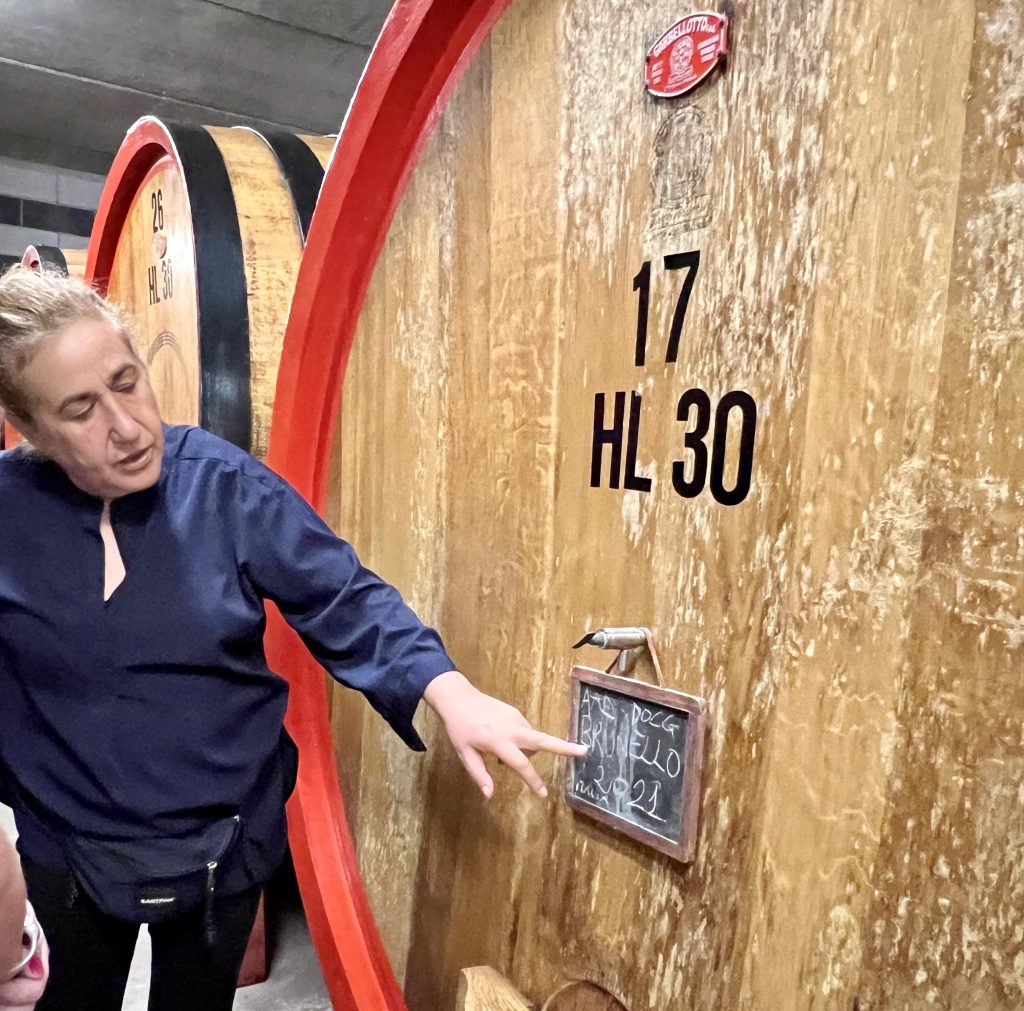
The winery also makes Amor Costante IGT, a Super-Tuscan blend of Sangiovese and Merlot, as well as grappa and extra virgin olive oil from its own trees. Because production is small (Laura says she presells her yearly production of 30,000 bottles, with more than 60% going to the U.S.), your best bet for tasting wines is by reserving a tour of the winery or at Osteria le Logge, a restaurant in Sienna which Gianni and Laura opened in 1977.
Kicking back in Cortona
Although I’ve learned how to swirl red wine in a glass so that it looks like I know what I’m doing, I’m no connoisseur. One of the things I enjoy most about visiting wine regions, therefore, is their small towns and villages, the older the better. In Tuscany, my base was Cortona, which occupies a hill surrounded by massive walls.
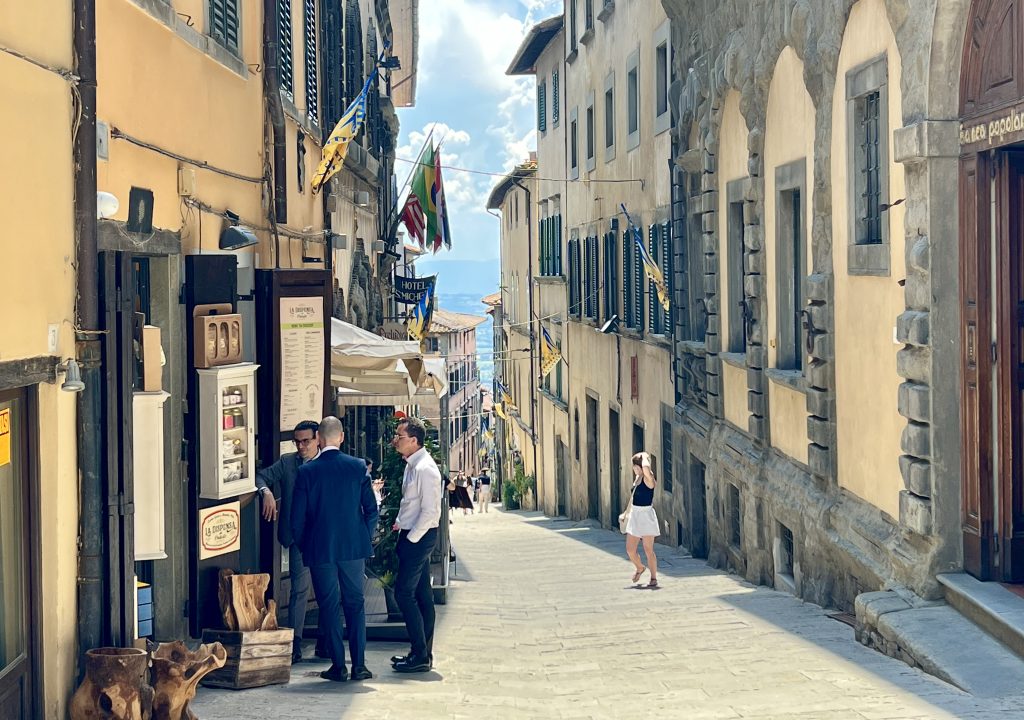
With a population of only 500, Cortona is smaller than Montepulciano and more intimate. That doesn’t make it unknown, however, thanks to Frances Mayes and her best-selling 2003 memoir Under the Tuscan Sun, followed in 2003 with a movie starring Diane Lane. In fact, I saw more Americans in Cortona than anywhere else; a taxi driver estimated that 90% of his riders are American.
But no matter the nationality, all visitors eventually end up on the main square, Piazza della Repubblica. It’s dominated by Palazzo Comunale, with this description by Mayes quoted on a signboard: “ A fourteenth-century town hall with twenty-four broad stone steps dominates the Piazza della Repubblica. The steps serve as ringside seats at night when everyone is out having gelato–a fine place to take in the evening spectacle below.”

But it’s the warren of narrow passageways, nooks, and crannies that captured my imagination, along with the town’s long history. Etruscans lived here beginning in the 8th century B.C., leaving behind sections of wall fortifications and many relics and artifacts preserved in the Museo dell’ Accademia Etrusca e della Citta di Cortona (luckily nicknamed MAEC). It also chronicles the village during Roman times. I saw many examples of Etruscan jewelry I would totally wear today.

Like all good medieval villages, Cortona also has its own saint, Saint Margaret (1247-1297), who bore a child out of wedlock with a patrician from Montepulciano before finding refuge in Cortona, embracing Franciscan ideals, and dedicating her life to the poor and sick. She was canonized by Pope Benedict XIII in 1728.
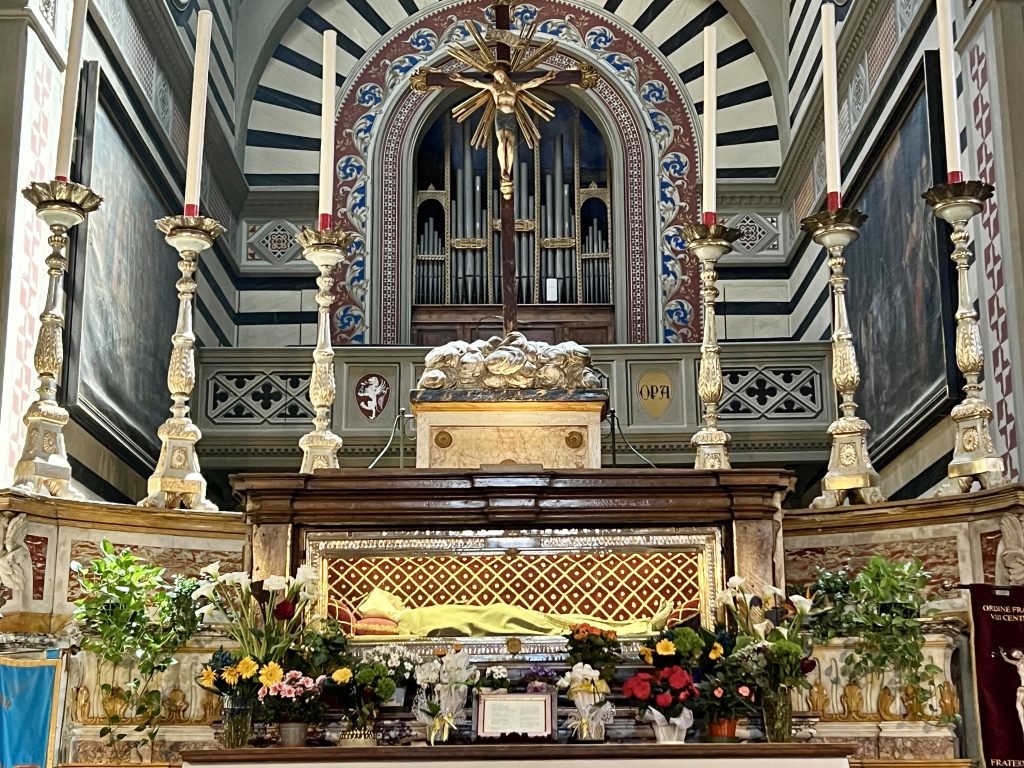
Cortona has also had its share of artists, with many works on display in the Museo Diocesano, which you’ll want to see anyway because this is where Cortona’s treasures from its many churches and palaces are displayed, in rooms built between the 15th and 16th centuries when it was the Church of Gesu.

Luca Signorelli, born in Cortona around 1441, was a renowned Renaissance painter. His Lamentation over the Dead Christ formerly graced the high altar of the Sanctuary of Santa Margherita but now hangs in the Museo Diocesano. Expressions of grief are especially conveyed by Mary, who seems drained as she holds the body of her lifeless son.

You can’t miss the Annunciation by Fra Angelico, who was born in Cortona around 1445 and is considered a master of the Italian Renaissance. Mayes cites the artwork as one of the museum’s treasures, “with a fabulous neon orange-haired angel.”

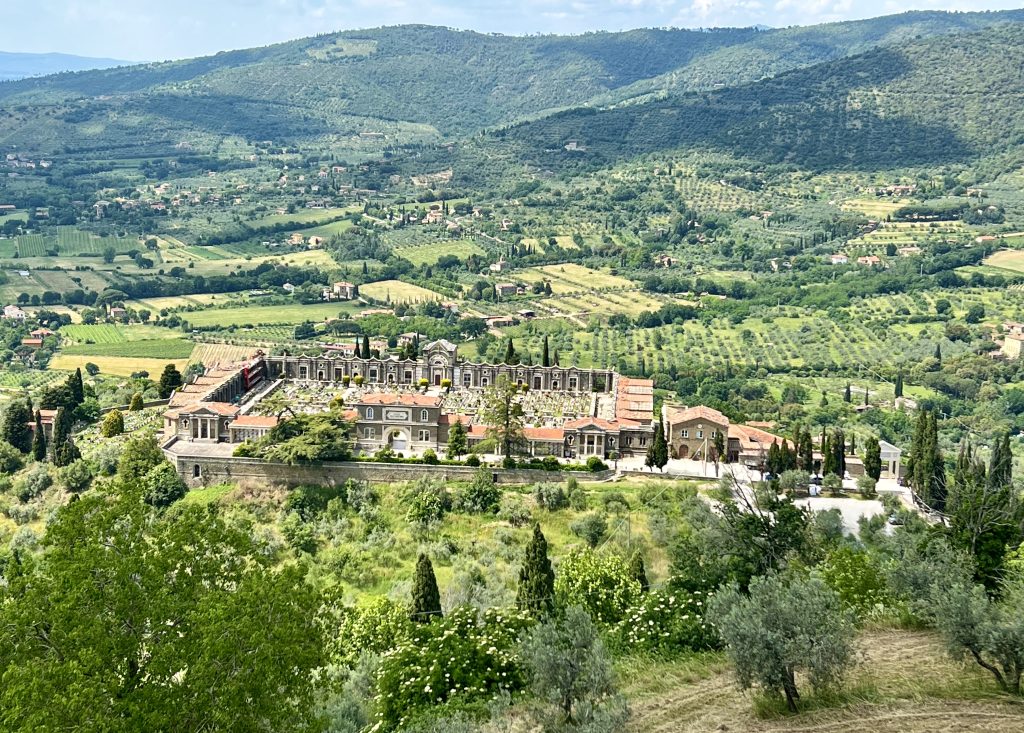
But mostly Cortona is for strolling, soaking in the ambiance at sidewalk cafés, or gazing at dreamy views of the countryside. Bells serenade from the town’s many churches, while dusk brings aptly named common swifts chirping and winging swiftly overhead. They, of course, have the best views of Cortona.
Dining in Tuscany
Meals in Italy are communal, the main event, something to be savored slowly with friends. To my mind, meals in Tuscany lean to the masculine, heavy on meats and pasta, while wine is the feminine counterpart and the icing on the cake.
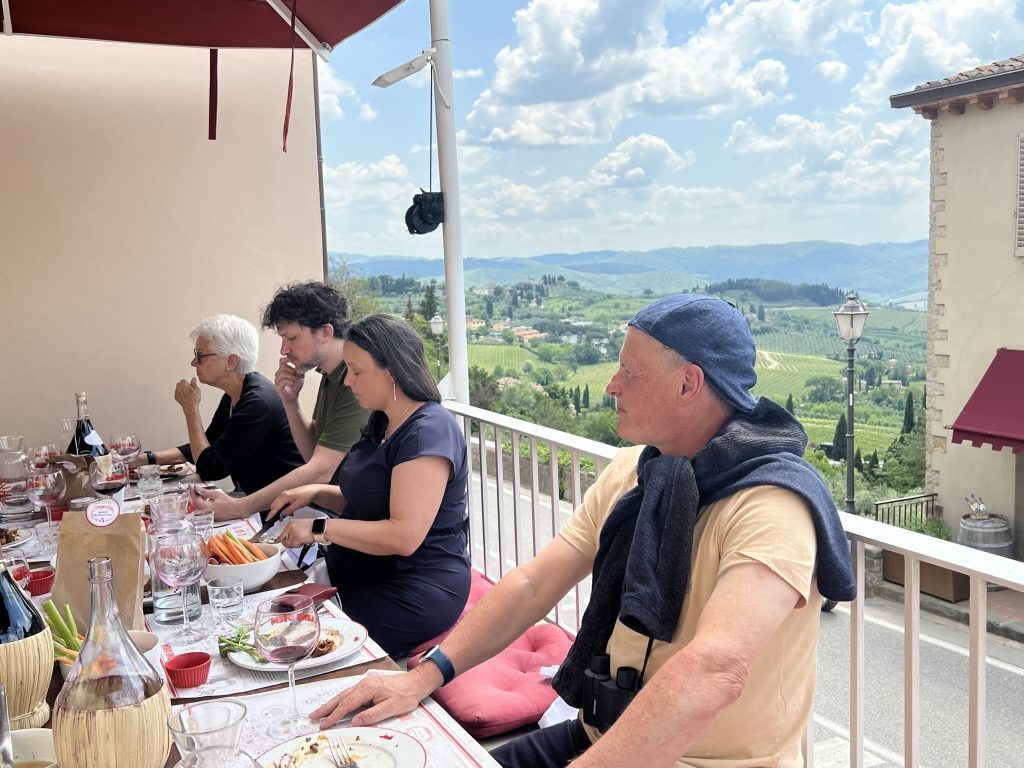
There are also great Tuscan soups, like Tuscan farro (chickpea soup), Ribollita (a winter soup made from kale, white beans, and stale bread), and pappa al pomodoro (a tomato soup flavored with garlic, basil, and olive oil).

Meats are local and fresh, consisting mostly of chicken, lamb, pork, veal, and steak dishes. But the most famous dish is Bistecca alla Fiorentina, a massive T-bone steak weighing at least two pounds, cooked over hot wood coals, and served rare, rendering it tender and juicy on the inside. It’s massive because it comes from the Chianina, the world’s largest bovine and up to 6 feet tall at its withers. It’s been bred in Italy for more than 2,000 years, making it the star in many Etruscan and Roman frescoes.
Although I was hoping to catch sight of the massive animal, I never saw one, though I did see it on menus. Now that I’ve been to Tuscany, I’m tempted to declare the Chianina the true Super-Tuscan.
Although I rarely join guided tours, my trip to Tuscany was under the able guidance of Michael Kirkendoll, who owns a wine bar in my hometown called Pane e Vino, named after one of his favorite restaurants in Cortona. What made the tour especially memorable was that our cozy group included friends, which would have made the trip more of a logistical challenge. What’s more, we could drink without worrying about driving. Check the restaurant’s website for future tours.
For more about wine regions, see my articles about the Baden region in Southern Germany, “Germany’s Black Forest has more than Cake and Cuckoo Clocks, published by East-West News Service, and “Explore one of the most underrated wine trails in the United States,” published by 10Best USA Today about Hermann, Missouri. I’ve also written blogs about Mendoza, Argentina and Valle de Guadalupe in Mexico.




It was a great trip. I was glad to have gone on this tour with so many friends.